
PACHAKAMANI
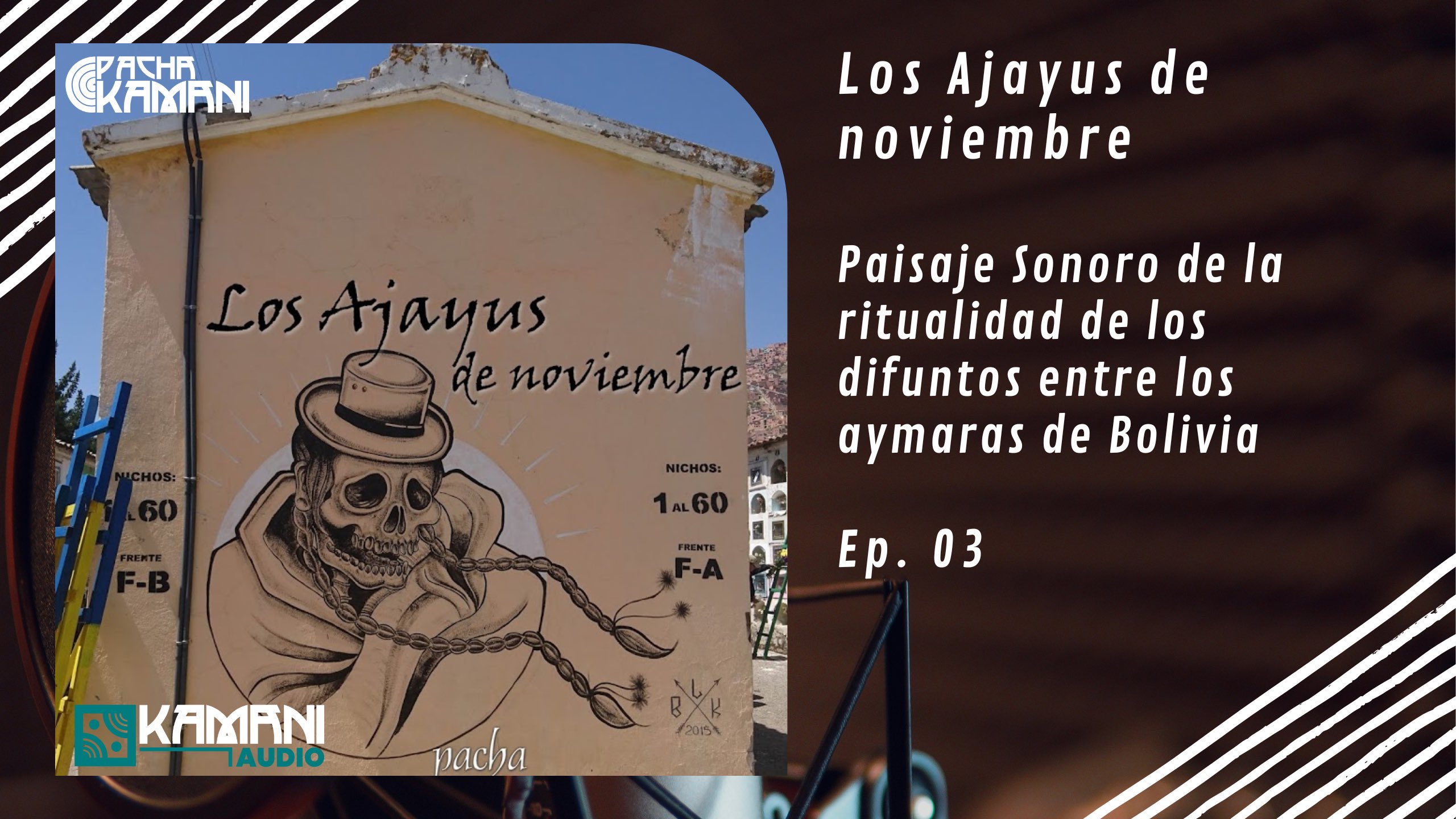
Ep # 03. Los Ajayus de noviembre.
Paisaje Sonoro de la ritualidad de los difuntos entre los aymaras de Bolivia (11/2016)
Richard Mújica y Gloria Villarroel
Tuesday 27th October, on our monthly slot at 12:00 on Berlin's and Brandenburg's free radio online and digital local radio on DAB+ Kanale 7D in Berlin and 12D in Brandenburg, we host back PACHAKAMANI (Bolivia).
Cerrando el mes de noviembre PachaKamani presenta este programa en memoria a nuestros difuntos. El programa número 03 de PachaKamani, inicia explicando el sonido en movimiento de tiempo y espacio, aspecto conocido con el concepto de paisaje sonoro. Ello se aplica al contexto ritual de “Todos santos” día del ajayu (espíritu) de los difuntos entre los aymara del departamento de La Paz.
Se inicia con la escucha de una grabación realizada el 2 de noviembre de 2016 en el Cementerio General de la Ciudad de La Paz (Bolivia) con lo cual se presenta una muestra del paisaje sonoro ritual que combina la música del alma pinkillu, voces de los “dolientes”, las oraciones para las almas de los difuntos y sonidos de la naturaleza en torno a las apxata.
Se realiza el análisis de cada una de las partes de esa grabación, en el siguiente orden:
• Descripción de la ritualidad de los difuntos presente en el mes de noviembre, además como un tiempo de transición entre la época seca y de lluvias. Se habla de la concepción del sentido de la vida y la muerte para la cultura aymara, sus antecedentes históricos y una descripción del proceso de dicha ritualidad contemporánea (recibimiento, apxata y despacho de las almas).
• Se escucha y comenta oraciones: a) para las Almas de los difuntos adultos para los cultivos, b) para los niños (“angelitos”) para la lluvia, c) para las almas olvidadas.
• Se escucha el Alma Pinquillo (muquni) de la provincia Omasuyos del departamento de La Paz (Bolivia).
• “Las músicas que le gustan al alma”, es decir se comenta la dinámica musical y diferentes formas musicales en el contexto urbano (yaraví, morenada, mariachi, wayños).
• Se cierra hablando de la práctica ritual de los difuntos entre los aymara, y la ocupación de diferentes espacios urbanos, su relación con los ciclos climatológicos (lluvia), su dinámica cultural (pieza musical: Pinkillada de Macha, Norte de Potosí – Bolivia, interpretada por Zenón Mamani).
• Dedicado a nuestros familiares y hermanos/as fallecidos/as.
Enlace al episodio https://pachakamani.com/podcast/ep-03-los-ajayus-de-noviembre-paisaje-sonoro-de-la-ritualidad-de-los-difuntos-entre-los-aymaras-de-bolivia-11-2016/
Enlace principal: PACHAKAMANI
- Estreno: Martes 27 de octubre - 12:00 hr (Al) - 7:00 am Bol
AIRES CREATIVOS
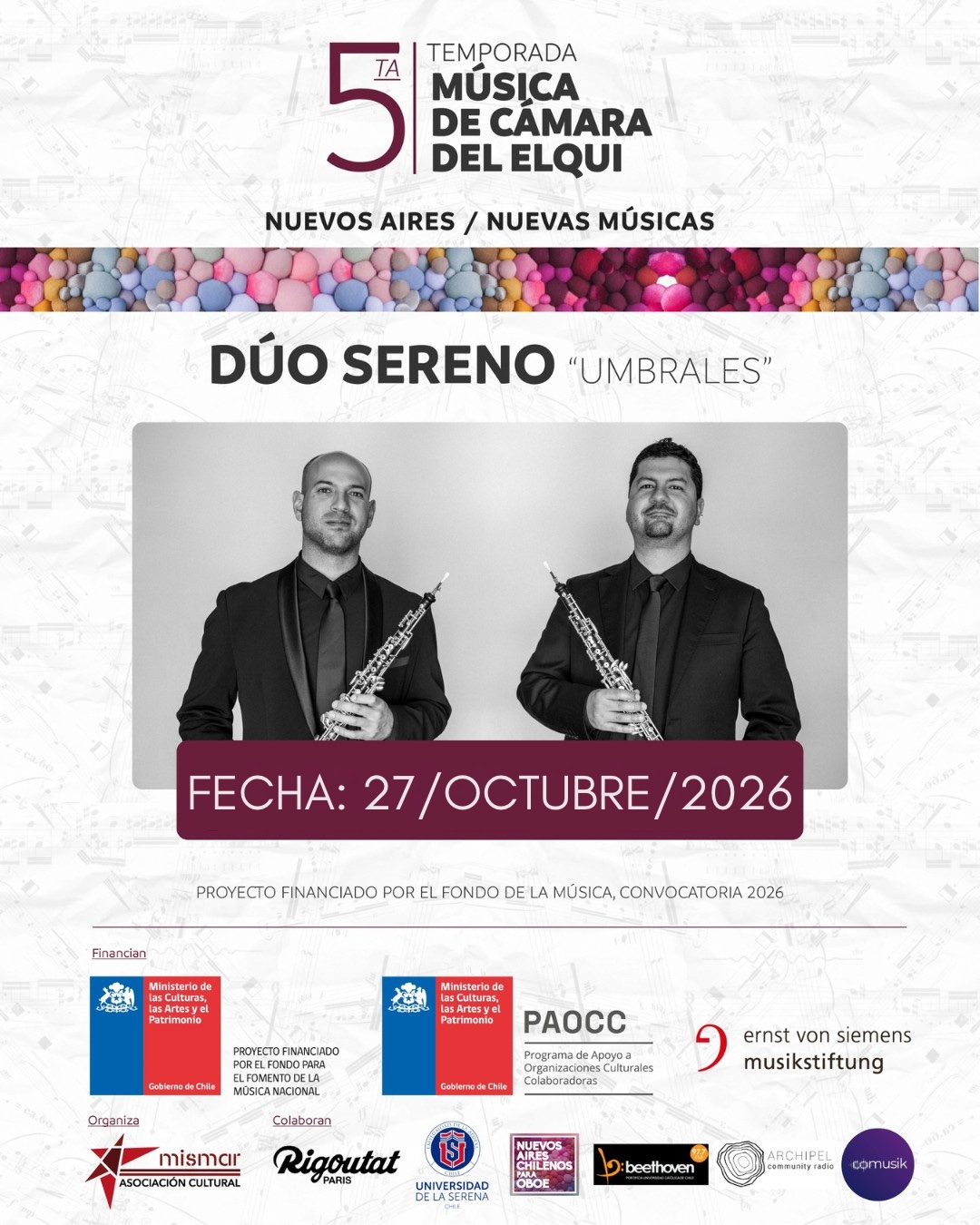
La 5ª Temporada de Música de Cámara del Elqui: Nuevos Aires / Nuevas Músicas inaugura su programación 2026 con el concierto “Umbrales”, a cargo del Dúo Sereno, integrado por los oboístas José Luis Urquieta Plaza y Leonardo Cuevas Gallardo.
José Luis Urquieta Plaza
Tuesday 27th October, on our monthly slot at 14:00 and replay at 2:00 am from the next day, on Berlin's and Brandenburg's free radio online and digital local radio on DAB+ Kanale 7D in Berlin and 12D in Brandenburg, we host back Aires Creativos - Dúo Sereno (Chile).
El programa propone un recorrido por la creación chilena contemporánea para dos oboes, con obras de Guillermo Rifo, Cristián Pereira, José Miguel Arellano, Pablo Carrasco y Jean Barahona. A través de estas piezas, el dúo explora distintas formas de diálogo sonoro, contraste, lirismo, tensión expresiva y búsqueda tímbrica, abriendo un espacio de escucha donde cada obra construye una atmósfera propia.
El concierto incluirá las obras “Épsilon” de Guillermo Rifo, “El lamento de Perséfone” de Cristián Pereira, “Mandrágora” de José Miguel Arellano, además de los estrenos de “El llamado del mar” de Pablo Carrasco e “Ilegítimo” de Jean Barahona. Les esperamos para el 27 de octubre de 2026, por Archipel Community Radio.
Radios online: https://archipel.community/ https://fr-bb.org/ https://www.colaboradio.org/ Radios digitales locales que reemplazan al FM: DAB 7D Berlin, 12D Potsdam
- Estreno: Martes 27 de octubre - 14:00 hr (Al) - 7:00 am Chile
- Repetición: Martes 27 de octubre - 9:00 pm (Chile) Miércoles 28 de octubre - 2:00 hr (Al)